
Reliable electricity is essential on every jobsite. Whether you’re a contractor, electrician, plumber, carpenter, or mobile service technician, your tools are only as productive as the power source behind them.
Traditionally, portable generators have been the default solution for powering tools in remote locations. However, modern battery systems paired with a 3000W pure sine wave inverter are becoming an increasingly popular alternative. They provide quiet operation, instant power, lower maintenance, and clean electricity suitable for both power tools and sensitive electronics.
This guide explains how a 3000W inverter can support professional jobsite applications, which tools it can power, and how to design a reliable mobile workshop power system.
While power tools are one of the most demanding inverter applications, understanding inverter sizing, surge capacity, battery requirements, and system design is equally important. For a broader overview, see our complete guide to 3000W Pure Sine Wave Inverters.
Why Contractors Choose a 3000W Inverter System
A 3000W inverter sits in the sweet spot between portability and performance.
Compared with smaller inverter systems, a 3000W model can support heavy-duty tools with high startup demands while remaining practical for truck-mounted battery systems.
Common applications include:
- Contractor trucks
- Mobile workshops
- Service vans
- Construction sites
- Agricultural maintenance vehicles
- Utility service fleets
For many professionals, a 3000W inverter eliminates the need to run a noisy generator throughout the workday.
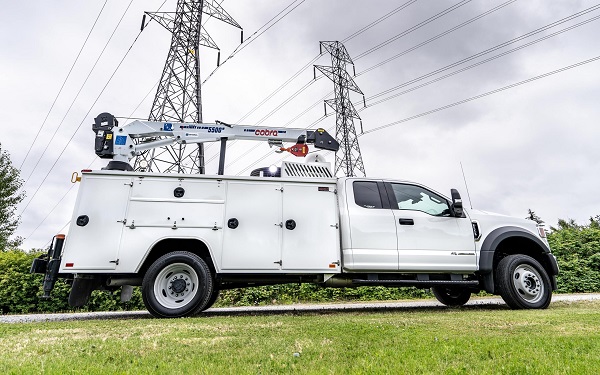
Work Trucks, Service Vans, and Mobile Workshops
Modern contractors increasingly rely on mobile power systems to operate tools and equipment directly from their vehicles. Instead of transporting portable generators to every jobsite, many electricians, plumbers, HVAC technicians, telecom service crews, and maintenance professionals install inverter systems in work trucks and service vans to create a fully functional mobile workshop.
A 3000W inverter provides enough power to support a wide range of daily jobsite activities. Technicians can charge cordless tool batteries, operate power tools, run diagnostic equipment, power laptops and printers, and even use small air compressors or worksite lighting when utility power is unavailable.
For service vehicles that spend most of the day traveling between locations, an inverter system offers several advantages over traditional generators. It provides instant AC power, operates quietly, requires less maintenance, and eliminates fuel storage concerns. This makes inverter-based mobile workshops particularly attractive for urban service fleets, utility contractors, and field maintenance teams.
Typical applications for a 3000W inverter system include:
- Electrical contractor service vans
- HVAC installation and maintenance vehicles
- Plumbing and mechanical service trucks
- Telecommunications and network maintenance fleets
- Mobile repair workshops
- Construction site support vehicles
When properly integrated with the vehicle’s charging system and battery bank, a 3000W inverter can transform a standard work truck into a reliable mobile power station. This allows technicians to work more efficiently, reduce downtime, and maintain productivity even in remote locations where grid power is unavailable.
For contractors who depend on portable power every day, a well-designed inverter system often becomes an essential part of the vehicle rather than just an optional accessory.
Power Requirements of Common Jobsite Tools
Different tools place different demands on an inverter.
Some require steady continuous power, while others generate large startup surges.
Typical Tool Power Requirements
| Tool | Running Watts | Startup Watts |
|---|---|---|
| Circular Saw | 1200–1800W | 3500–4500W |
| Miter Saw | 1500–2200W | 4000–5000W |
| Angle Grinder | 800–1500W | 2000–3000W |
| Rotary Hammer | 1000–1800W | 2500–3500W |
| Battery Charger | 100–500W | Minimal |
A quality 3000W pure sine wave inverter with 6000W surge capability can operate most of these tools successfully.
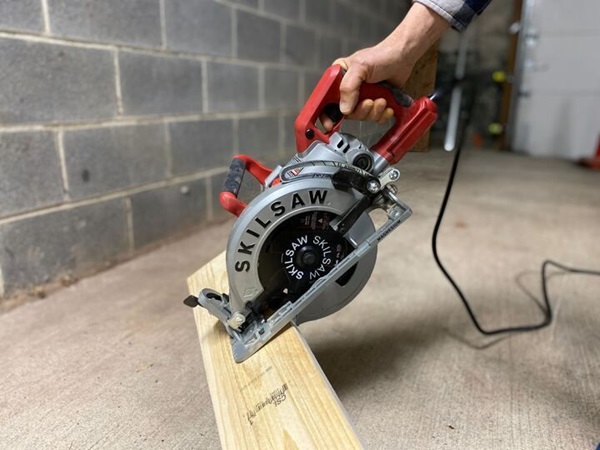
If you’re unsure whether a specific appliance or device can operate on a 3000W inverter, our guide to What Can a Power Inverter Run? provides additional examples and power calculations.
Continuous Output vs Startup Surge
Many inverter failures on jobsites are not caused by insufficient continuous power.
They are caused by startup surge.
For example:
A circular saw may consume:
- 1800W while cutting
But require:
- 4000W+ during startup
This is why surge capability matters more than the advertised wattage on the inverter label.
When evaluating a jobsite inverter, always compare:
- Continuous output rating
- Surge output rating
- Surge duration
Not all 3000W inverters perform equally under heavy motor loads.
Can a 3000W Inverter Run Multiple Tools?
Yes, but total power consumption must remain within system limits.
Example Configuration
- Circular Saw = 1800W
- Two Battery Chargers = 600W
- LED Work Lights = 100W
Total:
2500W
This setup remains comfortably within a 3000W inverter’s continuous rating.
However, operating multiple large motor-driven tools simultaneously may exceed surge limits.
Good load management is critical on active jobsites.
Motor-driven equipment often requires significantly higher startup power than its running wattage. For a detailed explanation of compressor loads and surge requirements, see our guide to 3000W Inverters for Air Conditioners and Compressor Loads.
Mobile Workshop Power Systems
Many contractors now use inverter-based power systems instead of portable generators.
A typical mobile workshop setup includes:
- 3000W Pure Sine Wave Inverter
- Lithium Battery Bank
- Vehicle Alternator Charging
- Shore Power Charging
- Optional Solar Charging
Benefits include:
- Silent operation
- No fuel storage
- Lower maintenance
- Instant startup
- Indoor-safe operation
This approach is especially popular among service vans and fleet vehicles operating in residential areas.
Many contractors add solar charging to extend runtime in remote locations. For a complete system design approach, explore our 3000W Off-Grid Solar Power Setup Guide.
Battery System Design for Contractor Vehicles
A 3000W inverter can provide reliable AC power for professional tools and equipment, but its performance depends heavily on the battery system supporting it. Unlike home backup systems, contractor vehicles must operate in a mobile environment where charging opportunities, installation space, and daily power demands can vary significantly.
When designing a power system for a work truck or service van, contractors should consider both peak power requirements and daily energy consumption. The battery bank must be large enough to support tool operation while maintaining sufficient reserve capacity for vehicle starting and other electrical loads.
Some contractors extend runtime by combining their inverter system with solar charging. Learn more in our guide to 3000W Solar Power Systems.
Battery Capacity for Daily Jobsite Operations
Battery capacity determines how long tools and equipment can operate when the engine is off. Contractors who primarily charge cordless tool batteries and power small devices may require only moderate battery storage. However, mobile workshops that frequently operate saws, grinders, lighting systems, or test equipment typically need larger battery banks.
The required capacity depends on:
- Number of tools used per day
- Average operating time
- Engine running time between jobs
- Availability of alternator or shore charging
For vehicles that spend long periods parked at jobsites, lithium battery systems are increasingly popular due to their higher usable capacity, faster charging, and reduced weight.
Recommended Battery Configurations
The ideal battery configuration depends on vehicle size and daily workload.
Light-Duty Service Vans
- 24V battery system
- Suitable for battery chargers, laptops, and light tool use
Contractor Work Trucks
- 24V or 48V system
- Supports multiple tools and extended daily operation
Mobile Workshop Vehicles
- High-capacity battery bank
- Often combined with additional charging sources for maximum runtime
A properly designed battery system not only improves inverter performance but also reduces downtime on the jobsite. For contractors who rely on mobile power every day, the battery bank is often just as important as the inverter itself.
24V vs 48V Systems for Contractor Vehicles
For 3000W inverter installations, higher battery voltage generally improves performance.
24V Systems
Advantages:
- Lower initial cost
- Simpler integration
Current draw at full load:
Approximately 125A
48V Systems
Advantages:
- Lower cable losses
- Reduced heat generation
- Higher efficiency
Current draw at full load:
Approximately 62A
Many commercial fleets now prefer 48V systems for heavy-duty applications.
Similar battery sizing principles apply to residential emergency power systems. See our 3000W Home Backup Power System Guide for examples involving refrigerators, sump pumps, and essential household circuits.
Common Jobsite Power Problems
Low Battery Voltage
Weak batteries cause inverter shutdowns during tool startup.
Undersized Cables
Voltage drop reduces inverter performance under load.
Insufficient Surge Capacity
Motor-driven equipment may exceed surge limits.
Poor Ventilation
Heat buildup can trigger thermal protection.
Modified Sine Wave Inverters
Some modern tools and chargers perform poorly on modified sine wave output.
Pure sine wave power is strongly recommended.
Why Pure Sine Wave Matters for Professional Tools
Many professional-grade tools now incorporate:
- Brushless motors
- Electronic speed controls
- Smart battery chargers
These devices perform best with utility-grade power.
Benefits of pure sine wave output include:
- Improved motor efficiency
- Reduced heat generation
- Better charger performance
- Longer equipment lifespan
- Increased reliability
For professional applications, pure sine wave technology is generally considered essential.
Choosing the Right 3000W Jobsite power Inverter
When selecting an inverter for contractor use, look for:
- Pure sine wave output
- 6000W surge capability
- Heavy-duty cooling system
- Low-voltage protection
- Overload protection
- Remote monitoring options
- Durable construction
Jobsite environments demand equipment capable of handling vibration, temperature fluctuations, and repeated high-load operation.
OEM Inverter Solutions for Work Truck Builders and Upfitters
As mobile workshops and contractor vehicles become more common, many vehicle builders and fleet upfitters are integrating inverter systems directly into their designs. A 3000W inverter provides reliable AC power for professional tools, battery chargers, laptops, and other equipment used in field service operations.
For OEM applications, system integration often requires more than selecting an inverter wattage. Factors such as battery voltage, charging systems, installation space, and vehicle electrical architecture must also be considered.
Manufacturers offering OEM and ODM inverter solutions can help vehicle builders customize inverter systems to meet specific application requirements, including private labeling, custom configurations, and specialized vehicle installations.
For contractors, fleet operators, and work truck manufacturers, a properly integrated 3000W inverter system can improve productivity by turning service vehicles into efficient mobile workspaces.
Conclusion
A 3000W power tool and jobsite power system provides an excellent alternative to traditional portable generators. With sufficient surge capacity and a properly sized battery bank, it can power circular saws, grinders, rotary hammers, battery chargers, compressors, and other professional equipment while delivering quiet, reliable operation.
For contractors, service technicians, and mobile workshop operators, a 3000W pure sine wave inverter offers the ideal balance between portability, power capability, and long-term operating efficiency.